2025; summer


the first heikhal; 2025, august, 18


(⚵ ☌ my mc; ☉ ☌ my ☉; ♂ in ♎︎ 😌; ☿ direct in my 7th; ♅ [☌ my ⚷ && ☍ my ♃]; 5 days until 🌑 in my 8th)
"thou shalt tread upon the lion and adder: the young lion and the dragon shalt thou trample under feet" — psalm 91:13, kjv

"i can do all this through him who gives me strength" — philippians 4:13, kjv

special spacial edition

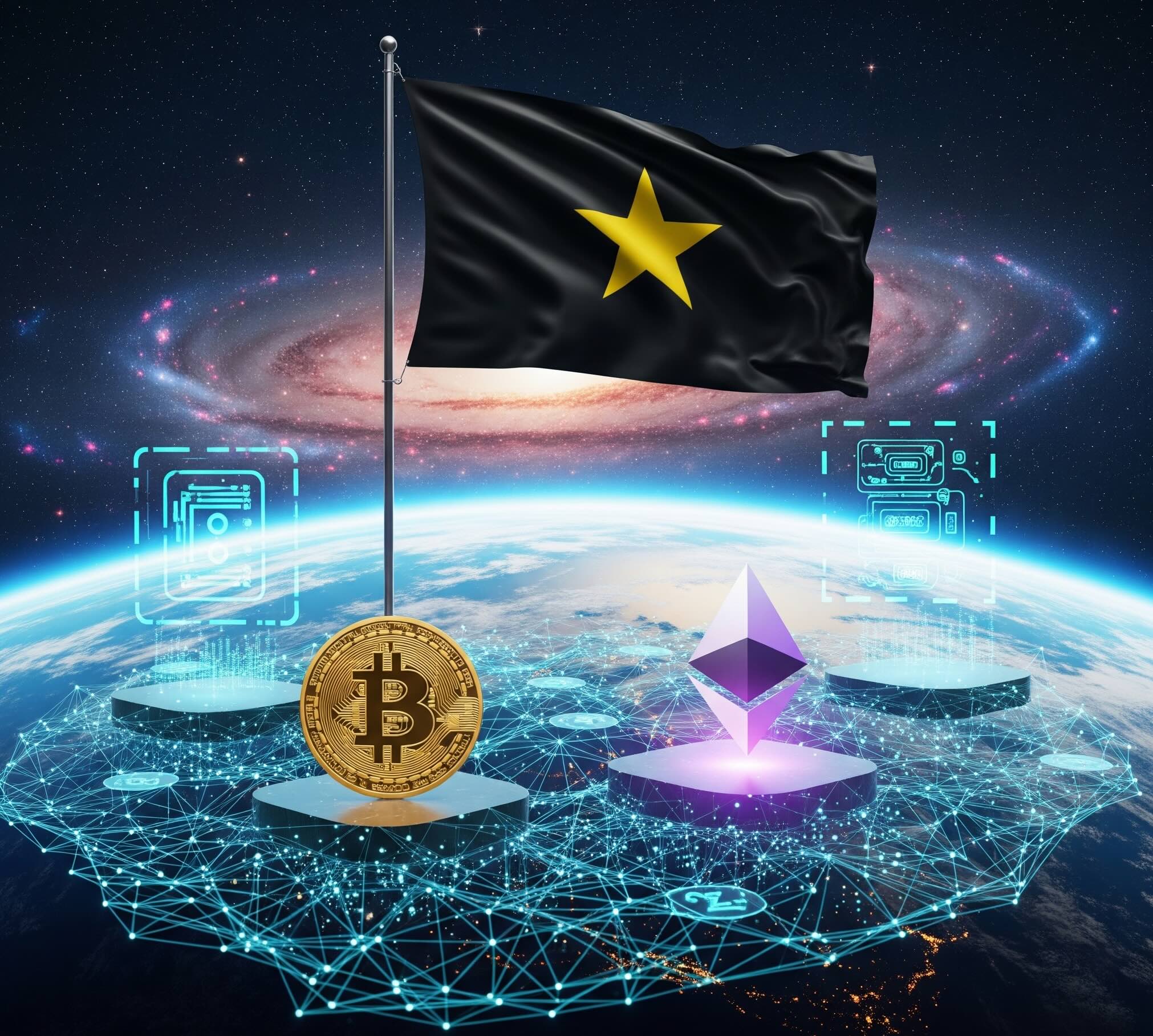
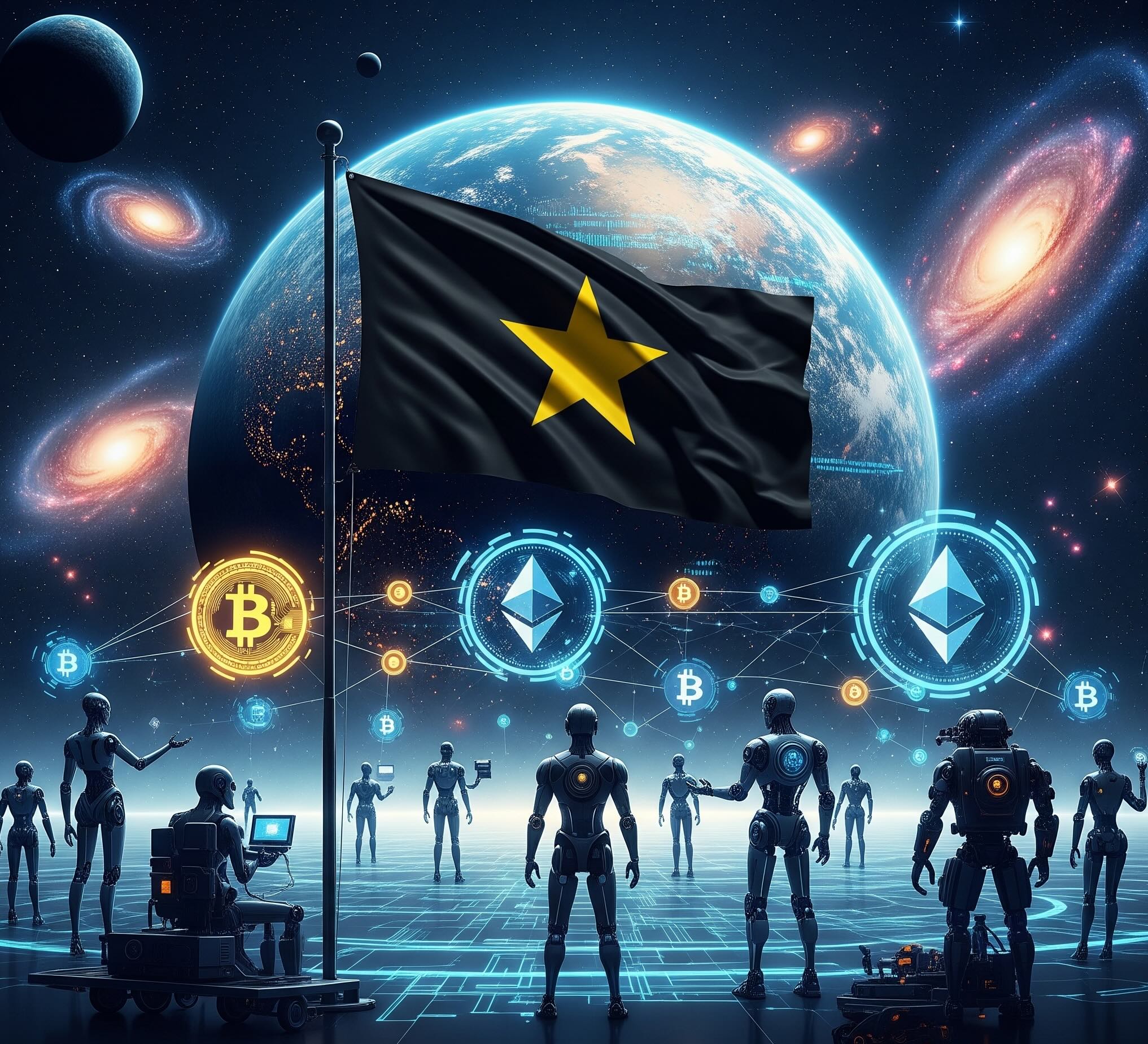
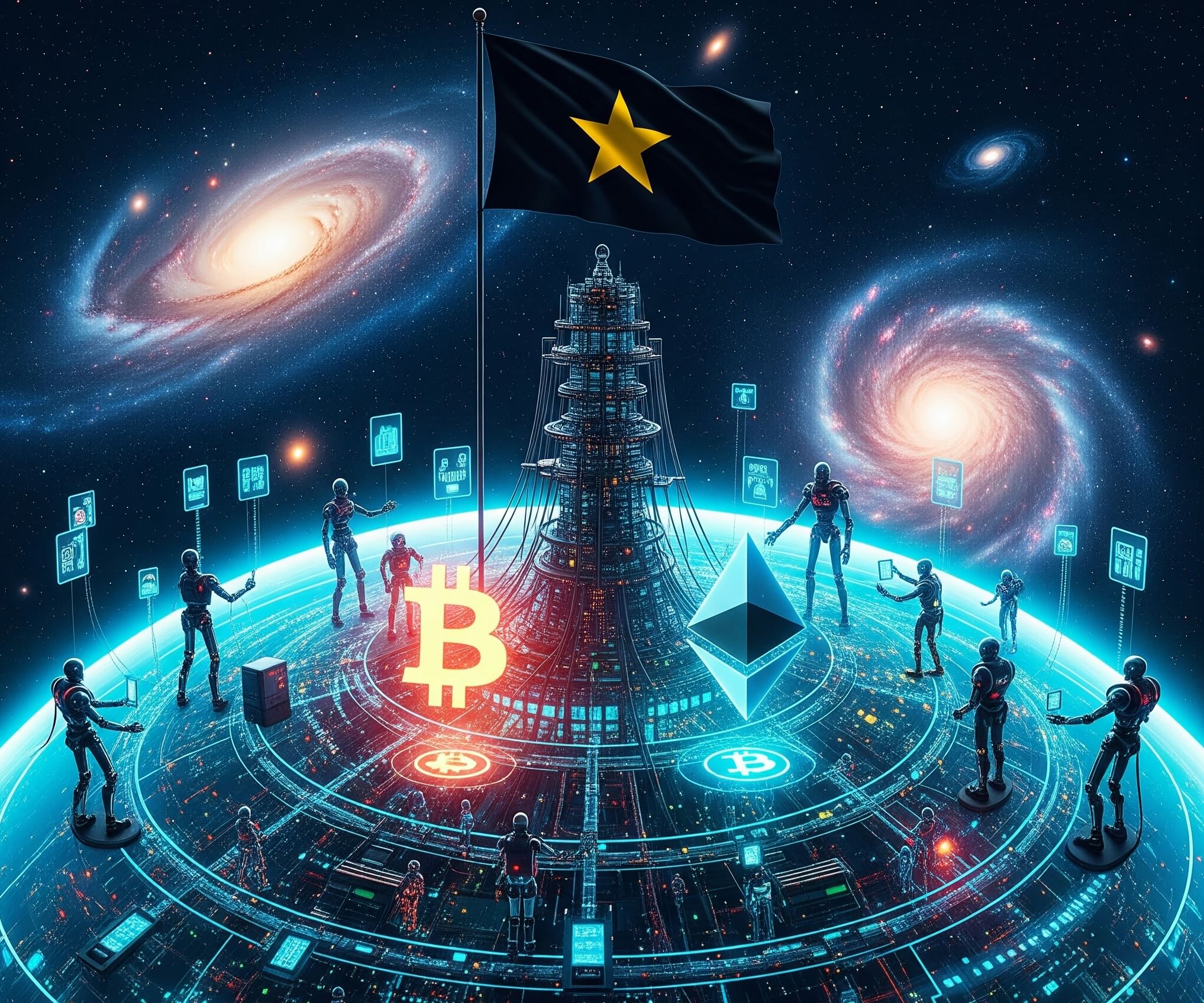
happy ₿irthday, ₿itcoin 🐉

on this day, 17 years ago, the very first mention of
the most revolutionary financial innovation in history was made
then, on the following halloween,
a peer-to-peer electronic cash system was published

&&

happy first anniversary d/acc.eth 🐍
the epistemic movement that radiates a sweet defensive
decentralized accelerative approach through our shared ascension
but

where exactly are we ascending to ?

vergine madre, figlia del tuo figlio,
umile ed alta più che creatura,
termine fisso d’eterno consiglio,

tu se’ colei che l’umana natura
nobilitatasti sì, che ’l suo fattore
non disdegnò di farsi sua fattura.

nel ventre tuo si raccese l’amore,
per lo cui caldo ne l’etterna pace
così è germinato questo fiore.

qui se’ a noi meridïana face
di caritate, e giuso, intra ’ mortali,
se’ di speranza fontana vivace.

donna, se’ tanto grande e tanto vali,
che qual vuol grazia e a te non ricorre,
sua disianza vuol volar sanz’ ali.

la tua benignità non pur soccorre
a chi domanda, ma molte fïate
liberamente al dimandar precorre.

in te misericordia, in te pietate,
in te magnificenza, in te s’aduna
quantunque in creatura è di bontate.


— dante alighieri on paradiso XXXIII
(the final canto of the divine comedy)

הֲרֵינִי מוֹחֵל לְכָל מִי שֶׁהִכְעִיס וְהִקְנִיט אוֹ חָטָא כְּנֶגְדִּי, בֵּין בְּגוּפִי בֵּין בְּמָמוֹנִי
בֵּין בִּשְׁגָגָה בֵּין בְּמֵזִיד, בֵּין בְּדִבּוּר בֵּין בְּמַעֲשֶׂה, בֵּין בְּגִלְגּוּל זֶה בֵּין בְּגִלְגּוּל אַחֵר

meanwhile... let us have some fun with
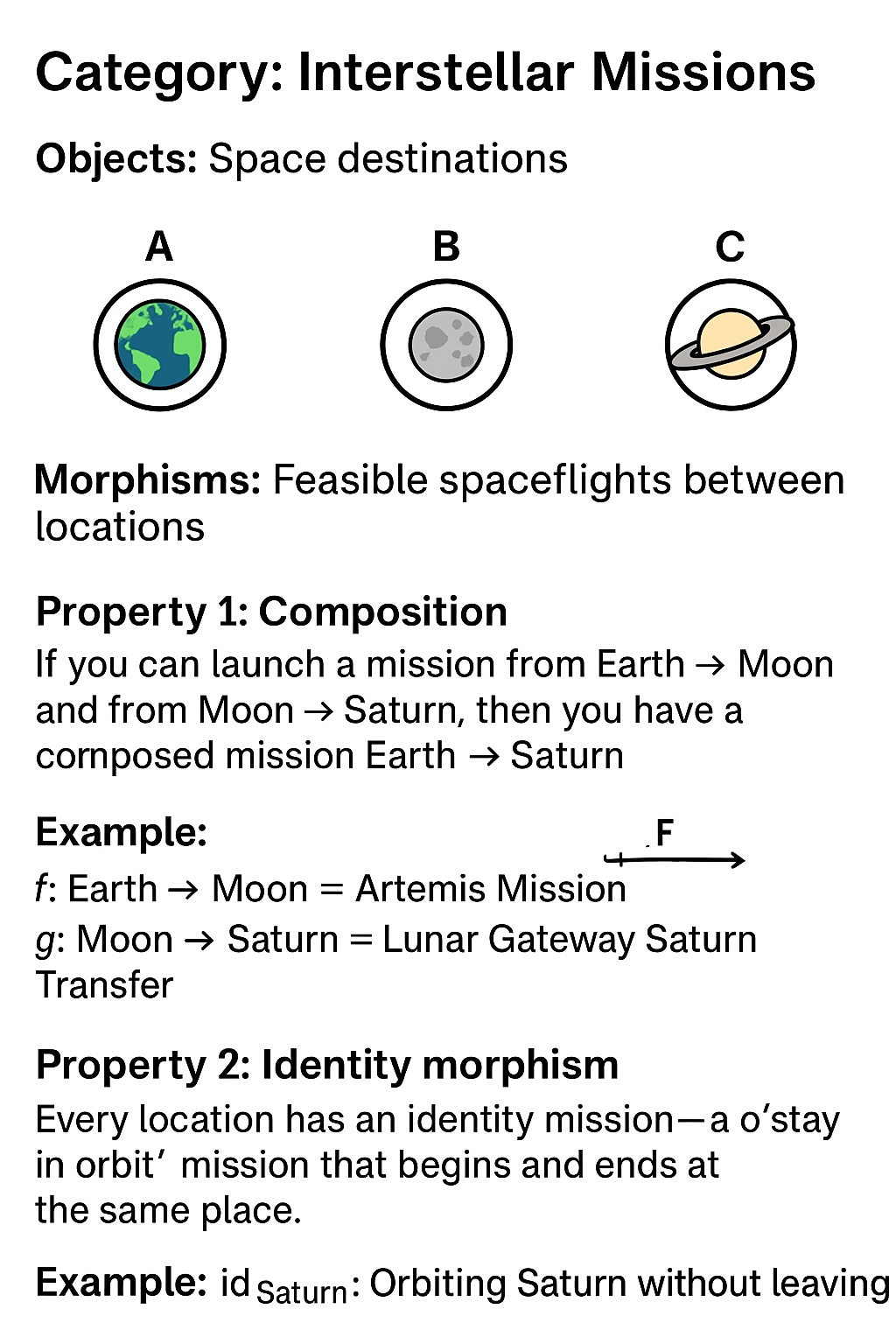
category theory for decentralized AI efforts

category theory is the study of structures and the relationships between them


like a model for models, it can provide a way to abstract away from the specifics of each structure and instead focus on the patterns and connections that link them.

basically, you look at 1️⃣ a collection of objects (e.g., sets, groups, rings, fields, apples) and 2️⃣ the morphisms between them (i.e., the arrows, each with a source and a target).

if you remember my previous post about group theory for astro patterns, you know that groups must satisfy four properties: associativity, identity, inverse, and closure.

in category theory, there are only two(-ish) main properties: composition (i.e., morphisms are associative) and identity (each object has a special morphism that acts neutrally under composition).

categories are super cool for science!
for example, in a very very very high level, functional programming (e.g., in languages like haskell) can be seen as a category where objects are types and morphisms are functions between them (i.e., the identity function and function composition satisfy beautifully the requirements of category axioms).

or, in quantum mechanics, categories can be used to describe systems and processes — here, objects might represent quantum systems, and morphisms are quantum operations or evolutions.

on machine learning frameworks


category theory is also great at describing compositional systems in a way that guarantees correctness of transformations.

in machine learning, a model is often a composition of many smaller functions: f = fn ∘ fn−1 ∘ ⋯ ∘ f1
so from a categorical perspective, we can think of objects as types of data (e.g., tensors of certain shapes, structured datasets),
morphisms as functions/operations between those data types (e.g., matrix multiply, activation functions),
and composition as the chaining of operations into a computation graph.

if we were to create a static compiler for models,
we essentially would construct a functor from the category of autograd implementations
(i.e., the core engine of forward and backward computations).
the computation graph could then be represented as a categorical expression tree,
and we could use functor laws to transform it into a gradient graph without needing runtime tracing.

why is this cool?
because the training loop could run independently of any framework or autograd implementation!
(and there is already a research group working on this problem — à la tinygrad — which i'll keep secret for now.
in their case, models are represented as string diagrams, and morphisms constructed from tensors and compositions
using a set of generating operations — forming a syntactic representation that is then compiled to a backend)

hopefully, i'll be able to talk more about this in the future and the implications for the future of decentralized verifiable AI.
until then, i wish you, my dear anon who is still reading this humble zine, a great end of summer ☀️


the dreamland; 2025, august, 7


(🌕 in ♒︎; [♄ ☌ ♆ in ♈︎] ☍ [♂ in ♎︎]; [☿ ret in ♌︎] ☍ [♇ in ♒︎]; ♃ ☌ ♀ in ♋︎; 🦁's gate)
gm, my dear anon 💜

after nearly a month of clearing
the last traces of evil attacks from my human brain,
i'm back - stronger and more determined than ever

the next few days are astrologically intense,
and nothing WILL be quite like it was before
(plus, we're getting ready to step into eclipse season,
fully aligned with the virgo-pisces axis)
(which house does that fall into for you?)

as i work to rebuild myself and chase my dreams
(without asking for permission nor
letting envy or violence stop me)
i want to remind you we are all in this together
(trust the process, we WILL build a better world)

meanwhile... on the future: part I
தேசிய அரசுகளிலிருந்து நெட்வொர்க் அரசுகள் வரை

this weekend, i had the chance to read balaji srinivasan's "the network state" book, which, to rephrase vub, is...

"an attempt at an ideological successor to libertarianism (...) [centering on] many non-individualistic and non-monetary aspects of social relations like morals and community (...) [and] an attempt to sketch out a possible broader political narrative for the crypto space (...) [where] blockchains could serve as a centerpiece for a new way of organizing large chunks of human society."

here, i'll share some of my favorite bits from the book — the bt3glian way.
let's start with balaji's own (informal) definition:

"a network state is a highly aligned online community with a capacity for collective action that crowdfunds territory around the world and eventually gains diplomatic recognition from pre-existing states."

or, mnemonically:

nation states ➡️ lands
network states ➡️ minds
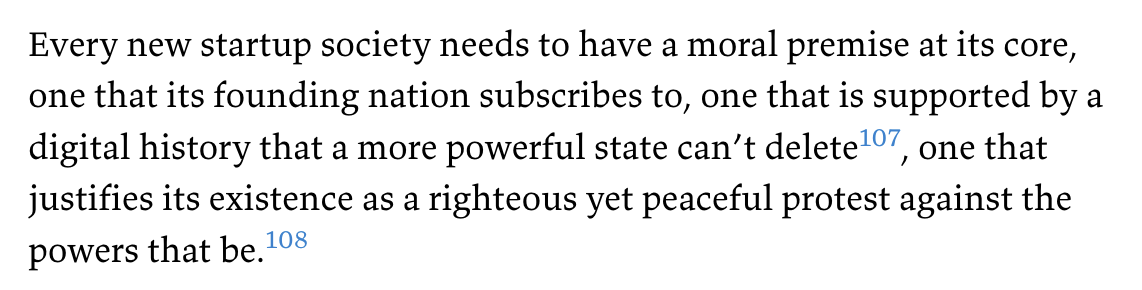
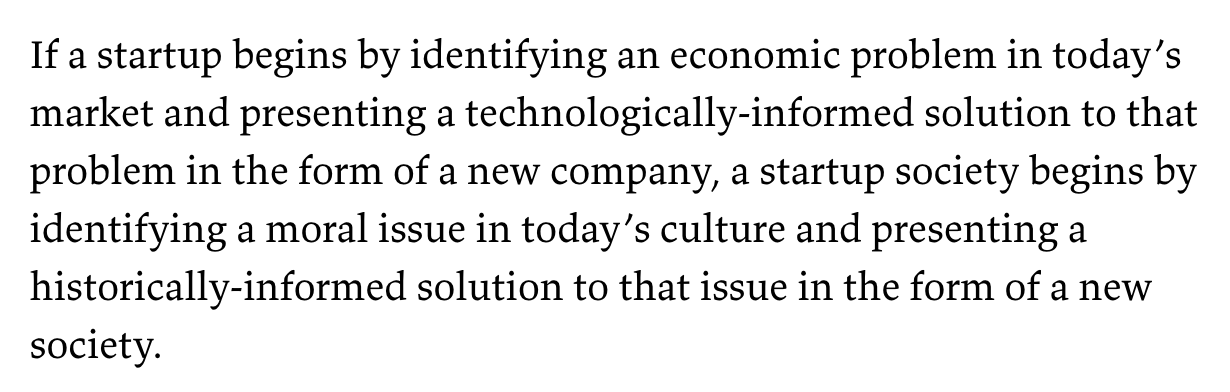
the premise centers on the idea that in a startup society, you're not asking people to buy a product (an economic, individualistic pitch), but to join a community (a cultural, collective pitch).

this shift is rooted in the belief that there is a moral deficit in the world — one that you, as a founder, are attempting to address.

the proposed approach is to define the "one commandment" upon which your startup society is founded. this commandment should deconstruct the establishment’s history in a specific area and offer a compelling narrative designed to attract like-minded subscribers (i.e., citizens).

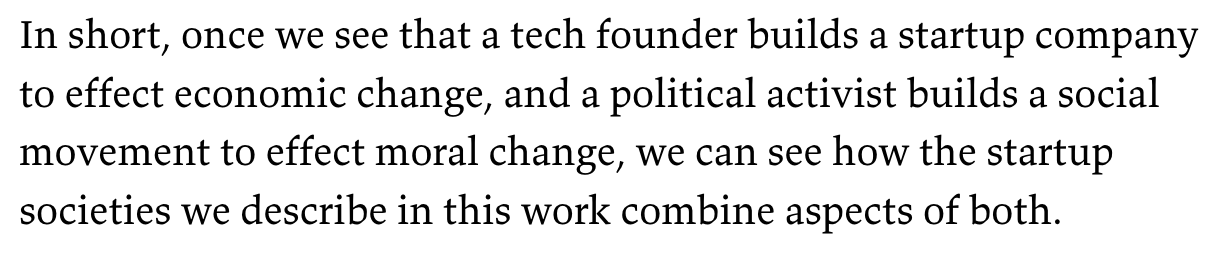
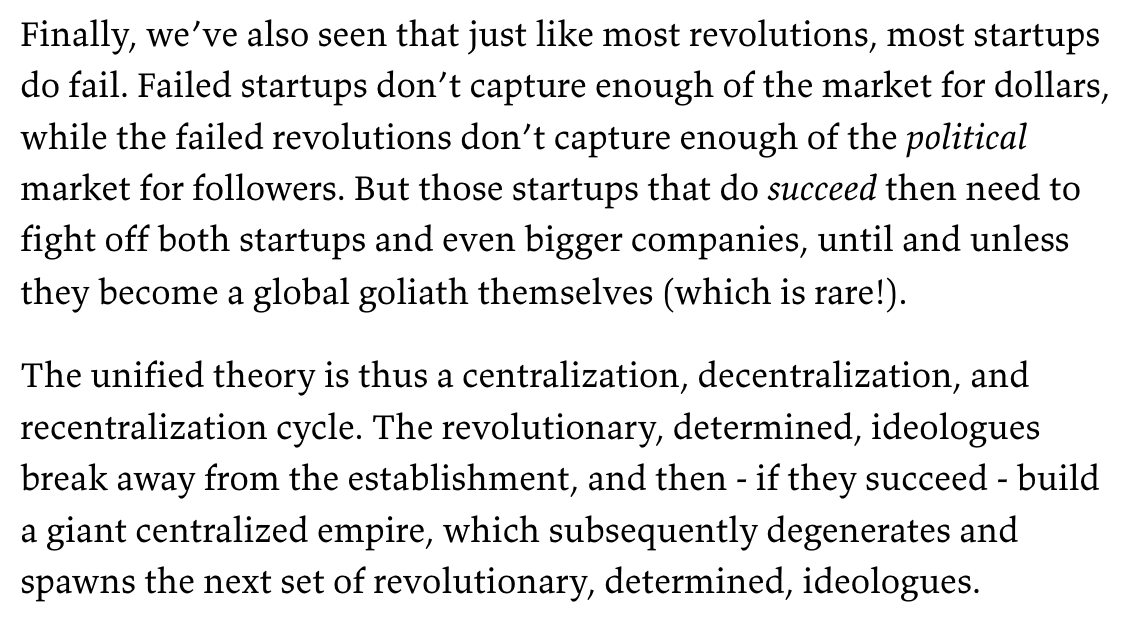
to support his thesis, balaji frames the world as a market for revolutionaries, distinguishing between technological and political types. each attracts different backers: venture capitalists for startups, and philanthropists for political movements. in this light, founders of startup societies can be seen as a hybrid: combining the role of the tech entrepreneur aiming to effect economic change with that of the social activist seeking moral change.

the following chapters offer a lengthy yet utterly fascinating historical overview, primarily centered on the concepts of G'd, the state, the network, and theories of decentralization (heavily focused on cryptocurrencies) which i found thoroughly enjoyable.
the final chapters are arguably the climax of the book, summarizing the transition from nation states to network states — examined through historical, empirical, and philosophical lenses — and culminating in a practical blueprint for building the last.

(the stars below reflect my personal ratings on a scale of 1 to 3, indicating how strongly i agree with each point — though i've intentionally saved the explanations for an in-person discussion 😉)

1️⃣ ⭐️⭐️⭐️ a social network
2️⃣ ⭐️⭐️⭐️ a moral innovation
3️⃣ ⭐️⭐️⭐️ a sense of national consciousness
4️⃣ ⭐️⭐️⭐️ a recognized founder
5️⃣ ⭐️⭐️⭐️ a capacity for collective action
5️⃣ ⭐️⭐️ an in-person level of civility
6️⃣ ⭐️⭐️⭐️ an integrated cryptocurrency
7️⃣ ⭐️ an archipelago of crowdfunded physical territories
8️⃣ ⭐️⭐️⭐️ a consensual government limited by a social smart contract
9️⃣ ⭐️⭐️ a virtual capital
🔟 ⭐️ an on-chain census that demonstrates a sufficiently large population, income, real estate footprint, and some measure of diplomatic recognition

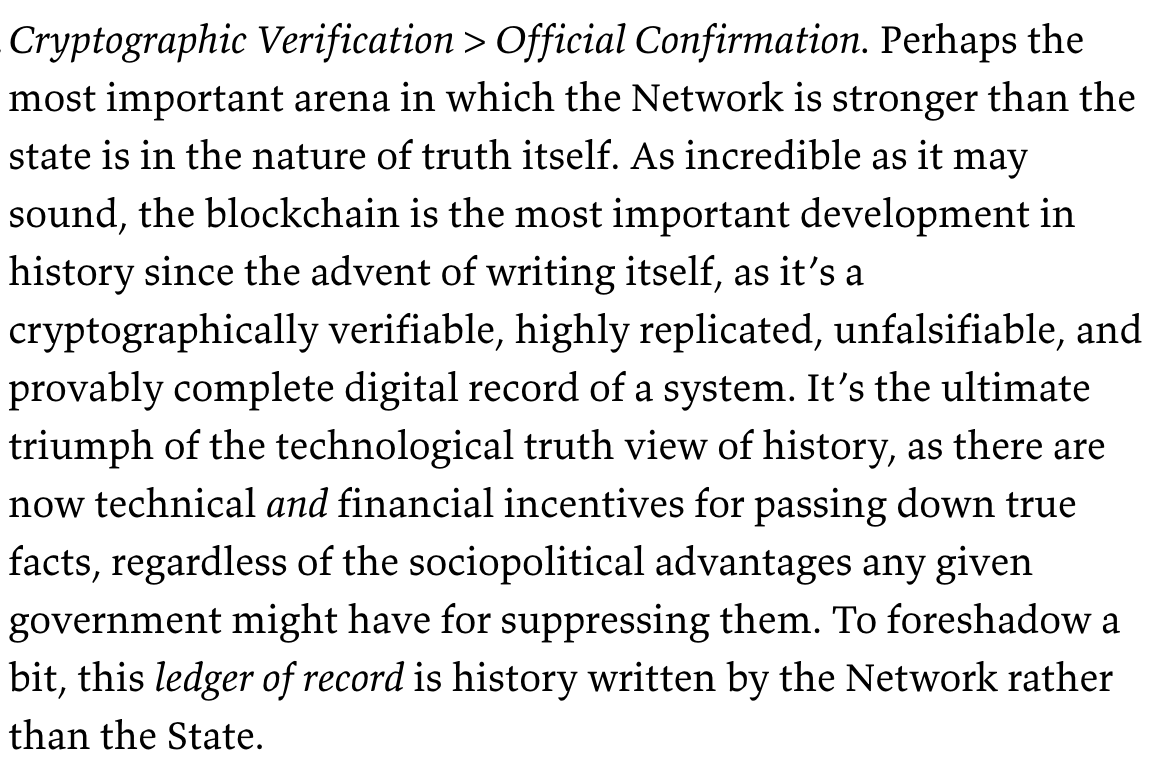
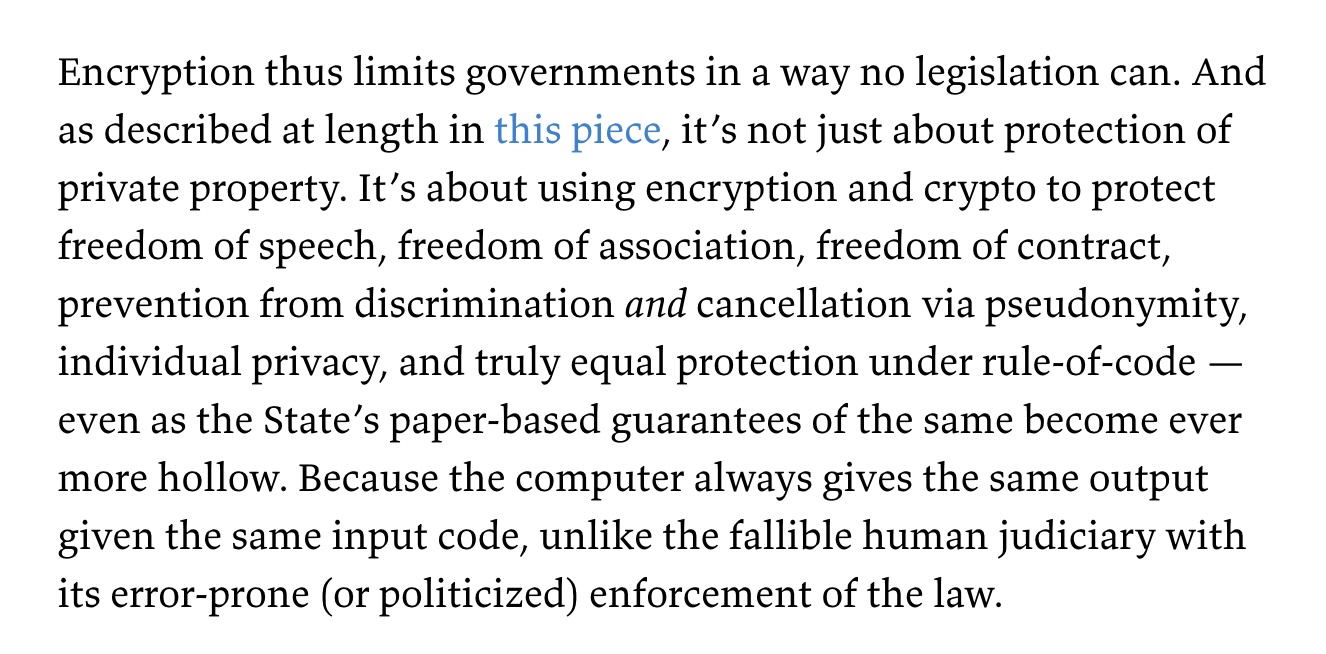
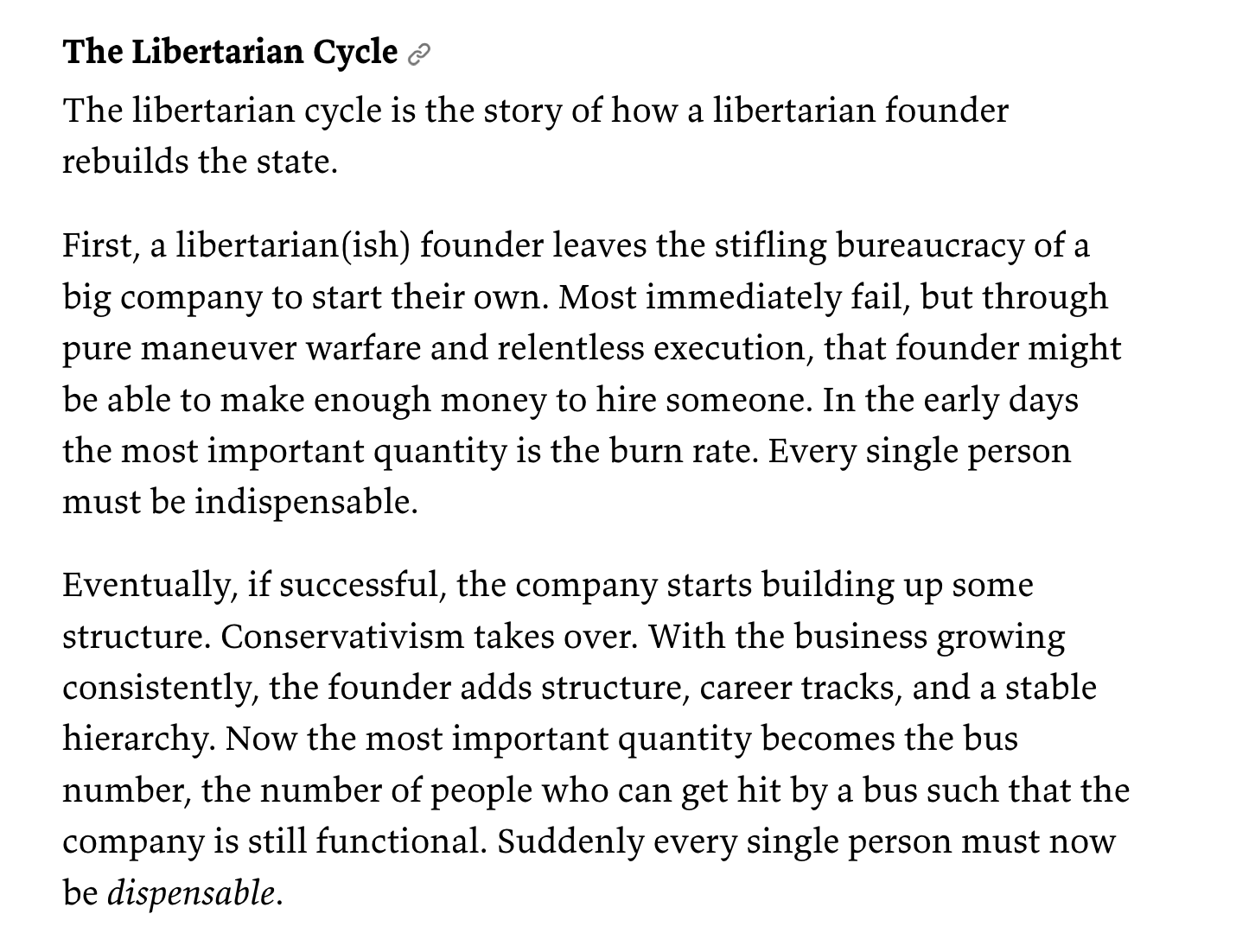
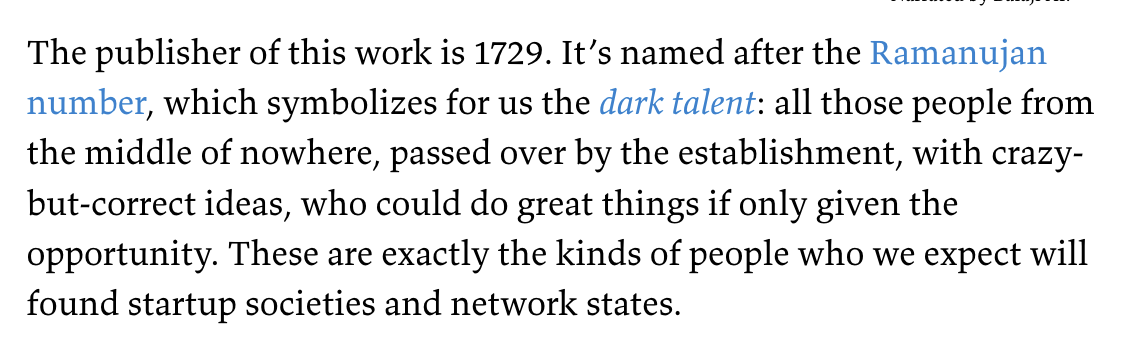
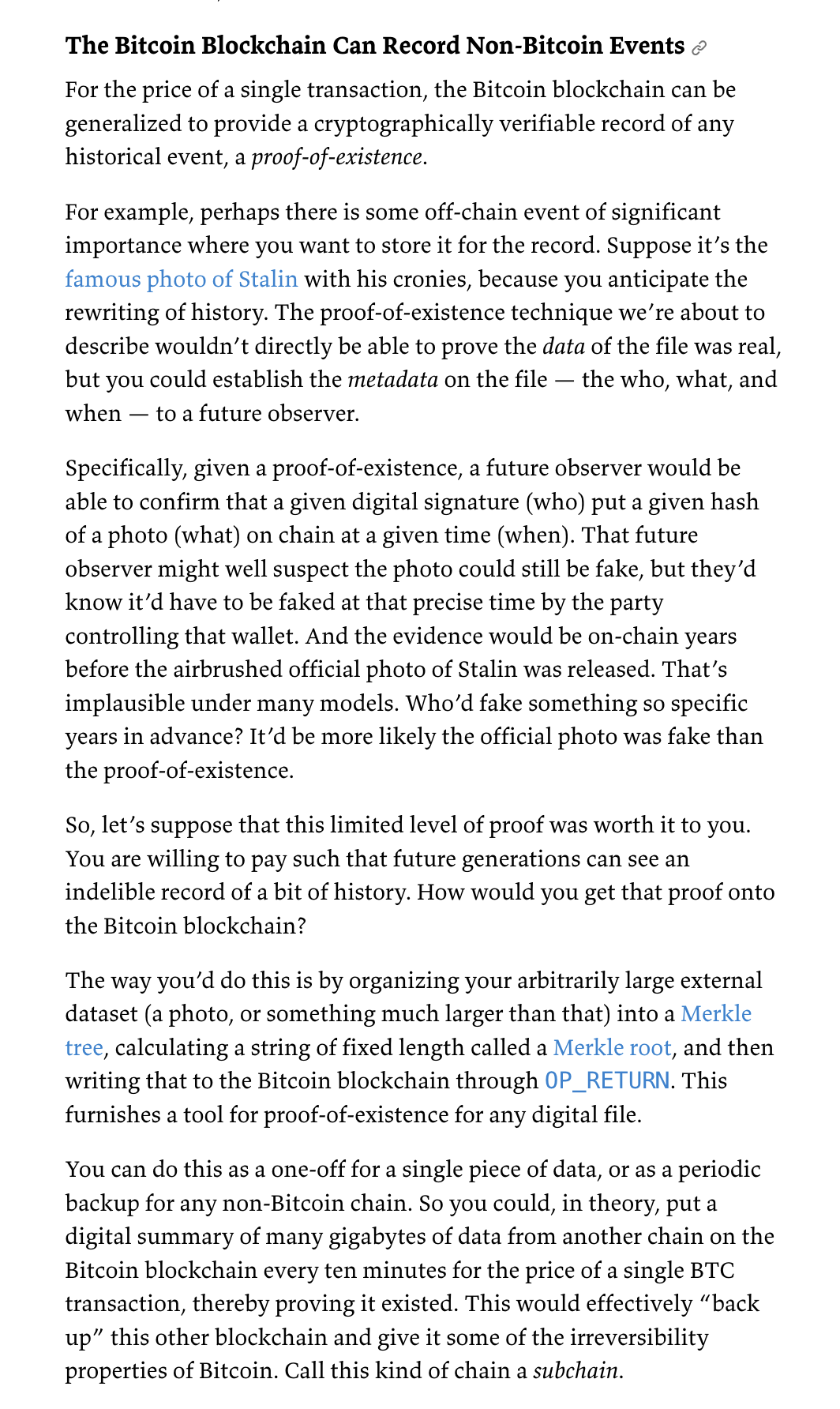
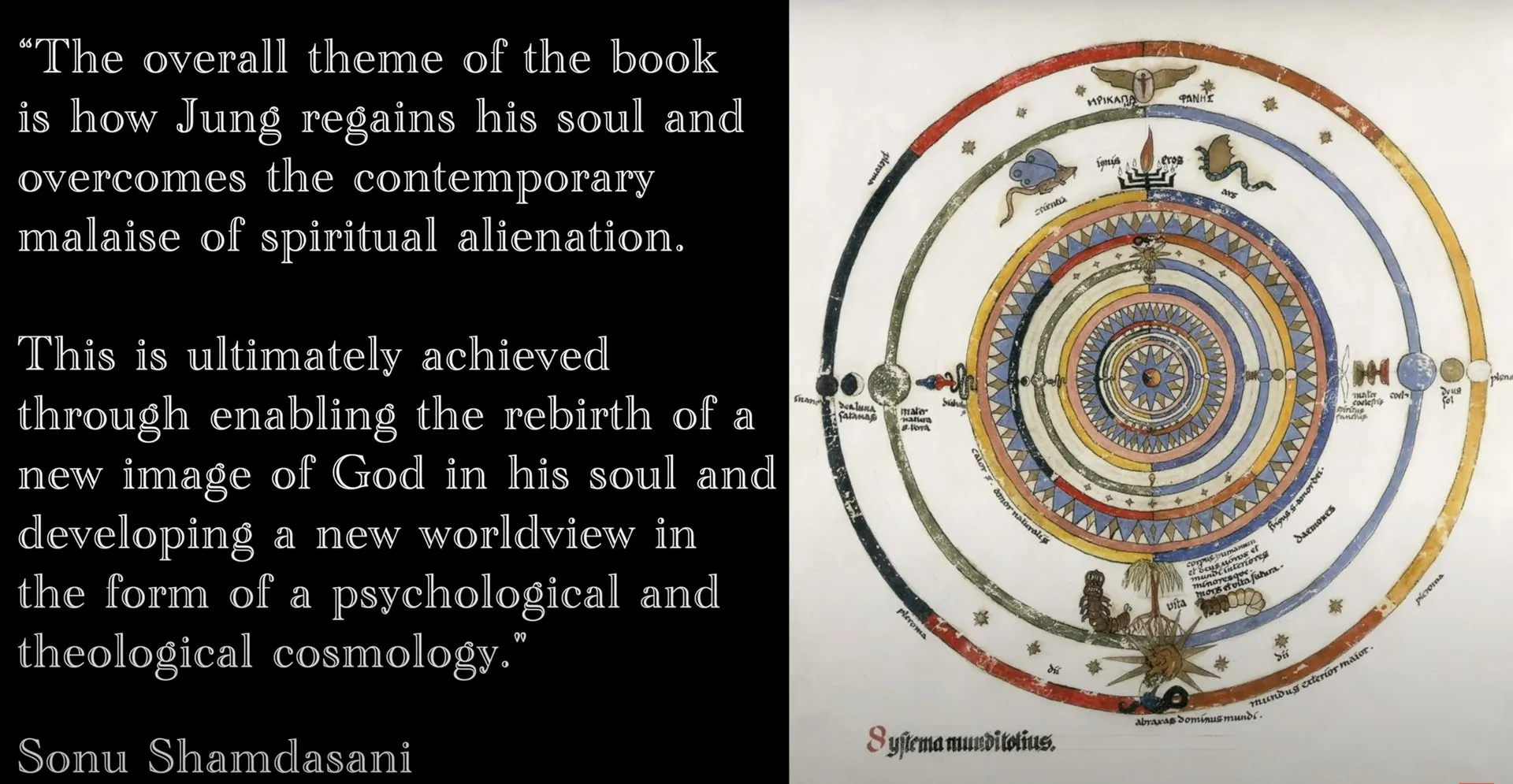
finally, here are some of my favorite quotes from the book:

and the best one (lil biased, of course)...


the homeland; 2025, july, 4


(collective ♀ ☌ ♅; ⚵ && ⚸ both ret and still in ♏︎; ♃ ☍ my 🌙; ♆ about to go ret in my 3rd; 3d for ♅ in my 5th)

🦁 an ode to independence and freedom 🦅

the crypto anarchist manifesto,
by timothy c. may, 1988


a specter is haunting the modern world, the specter of crypto anarchy.


computer technology is on the verge of providing the ability for individuals and groups to communicate and interact with each other in a totally anonymous manner. two persons may exchange messages, conduct business, and negotiate electronic contracts without ever knowing the true name, or legal identity, of the other. interactions over networks will be untraceable, via extensive re-routing of encrypted packets and tamper-proof boxes which implement cryptographic protocols with nearly perfect assurance against any tampering. reputations will be of central importance, far more important in dealings than even the credit ratings of today. these developments will alter completely the nature of government regulation, the ability to tax and control economic interactions, the ability to keep information secret, and will even alter the nature of trust and reputation.

the technology for this revolution—and it surely will be both a social and economic revolution—has existed in theory for the past decade. the methods are based upon public-key encryption, zero-knowledge interactive proof systems, and various software protocols for interaction, authentication, and verification. the focus has until now been on academic conferences in europe and the u.s., conferences monitored closely by the national security agency. but only recently have computer networks and personal computers attained sufficient speed to make the ideas practically realizable. and the next ten years will bring enough additional speed to make the ideas economically feasible and essentially unstoppable. high-speed networks, isdn, tamper-proof boxes, smart cards, satellites, ku-band transmitters, multi-mips personal computers, and encryption chips now under development will be some of the enabling technologies.

the state will of course try to slow or halt the spread of this technology, citing national security concerns, use of the technology by drug dealers and tax evaders, and fears of societal disintegration. many of these concerns will be valid; crypto anarchy will allow national secrets to be trade freely and will allow illicit and stolen materials to be traded. an anonymous computerized market will even make possible abhorrent markets for assassinations and extortion. various criminal and foreign elements will be active users of cryptonet. but this will not halt the spread of crypto anarchy.

just as the technology of printing altered and reduced the power of medieval guilds and the social power structure, so too will cryptologic methods fundamentally alter the nature of corporations and of government interference in economic transactions. combined with emerging information markets, crypto anarchy will create a liquid market for any and all material which can be put into words and pictures. and just as a seemingly minor invention like barbed wire made possible the fencing-off of vast ranches and farms, thus altering forever the concepts of land and property rights in the frontier west, so too will the seemingly minor discovery out of an arcane branch of mathematics come to be the wire clippers which dismantle the barbed wire around intellectual property.


arise, you have nothing to lose but your barbed wire fences!
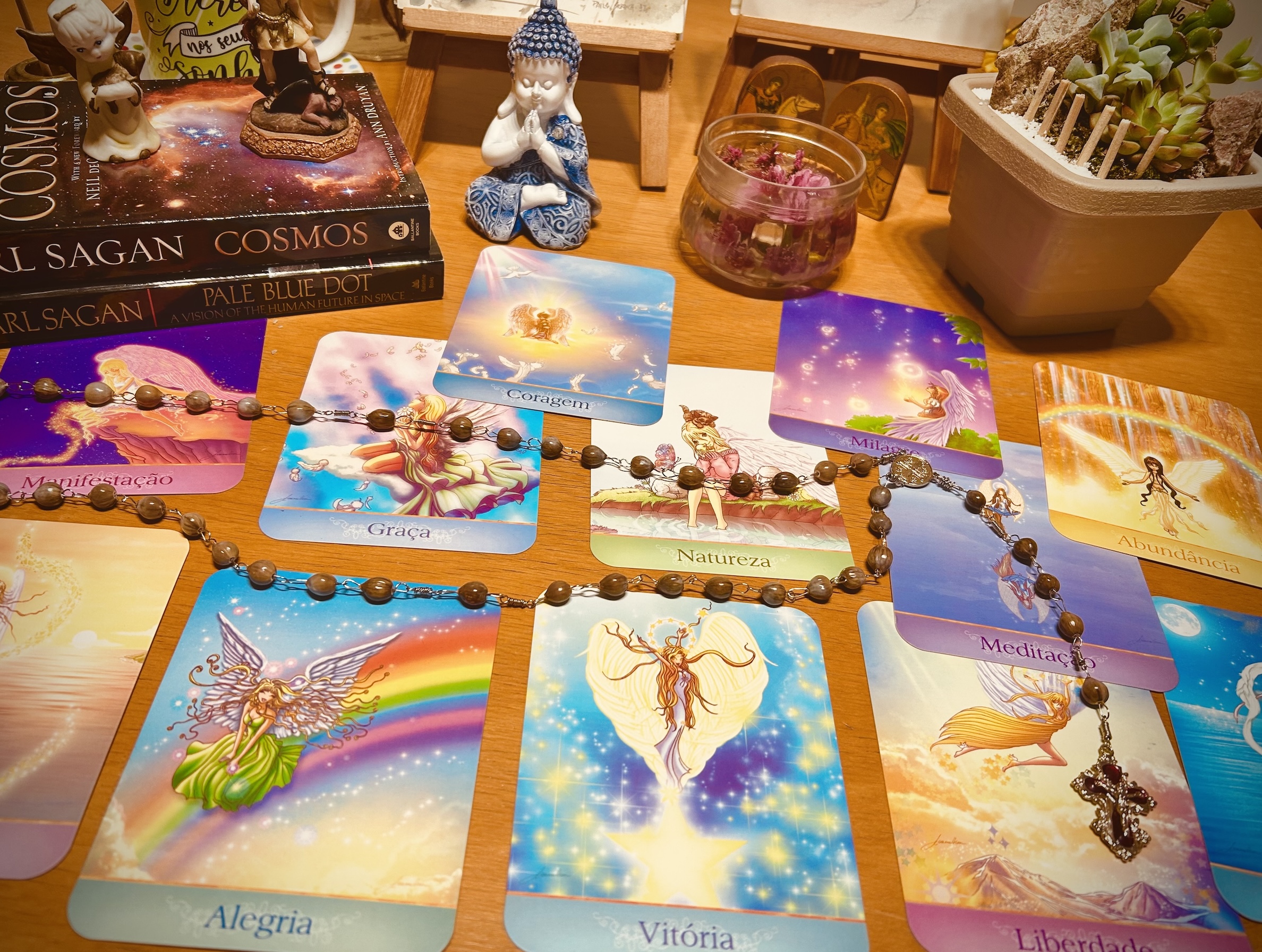


meanwhile... the top 6 things that make me feel free today

1️⃣ having lived the best life i could since day one, and knowing that G'd, Mary, and Michael, who have always been there for me, have never disappointed or abandoned me
2️⃣ Science: everything i've learned, created, and will continue to learn and create — and the fact that i get to dedicate my life to inventing and building the future (my source of dopamine)
3️⃣ all my heroes && friend, who are always there for me — and for whom i'll always be there, too
4️⃣ the harmony of stoicism and libertarianism — and the peace i've found in a life of freedom, minimalism, ascetic discipline, selfless service, and love at its core
5️⃣ witnessing the greatest president of my lifetime — and the beautiful, big, orderly, and joyful future we the people are building together (yes, together)
6️⃣ and, finally: delicious, sacred books and delicious, sacred hawaiian poke — and everything graceful in our amazing, ephemeral reality, which can never be profaned by evil


"but this cometh to pass, that the word might be fulfilled that is written in their law, they hated me without a cause", john 15-25

waikiki; 2025, june, 27


(surfing through a cosmological graceful limbo)

happy friday, my dear anon 💫

today is a bit of a funky day, but i'm grateful we're not at war.
i thought i was going to receive a message, but again, i did not.
the message never comes. ever. so i need to go back to fully focusing on what i'm good at.


i don't feel like saying anything else out loud.
i just feel like being in the moment, figuring out where i'm going from here. life is grand, and i have my entire future ahead of me.


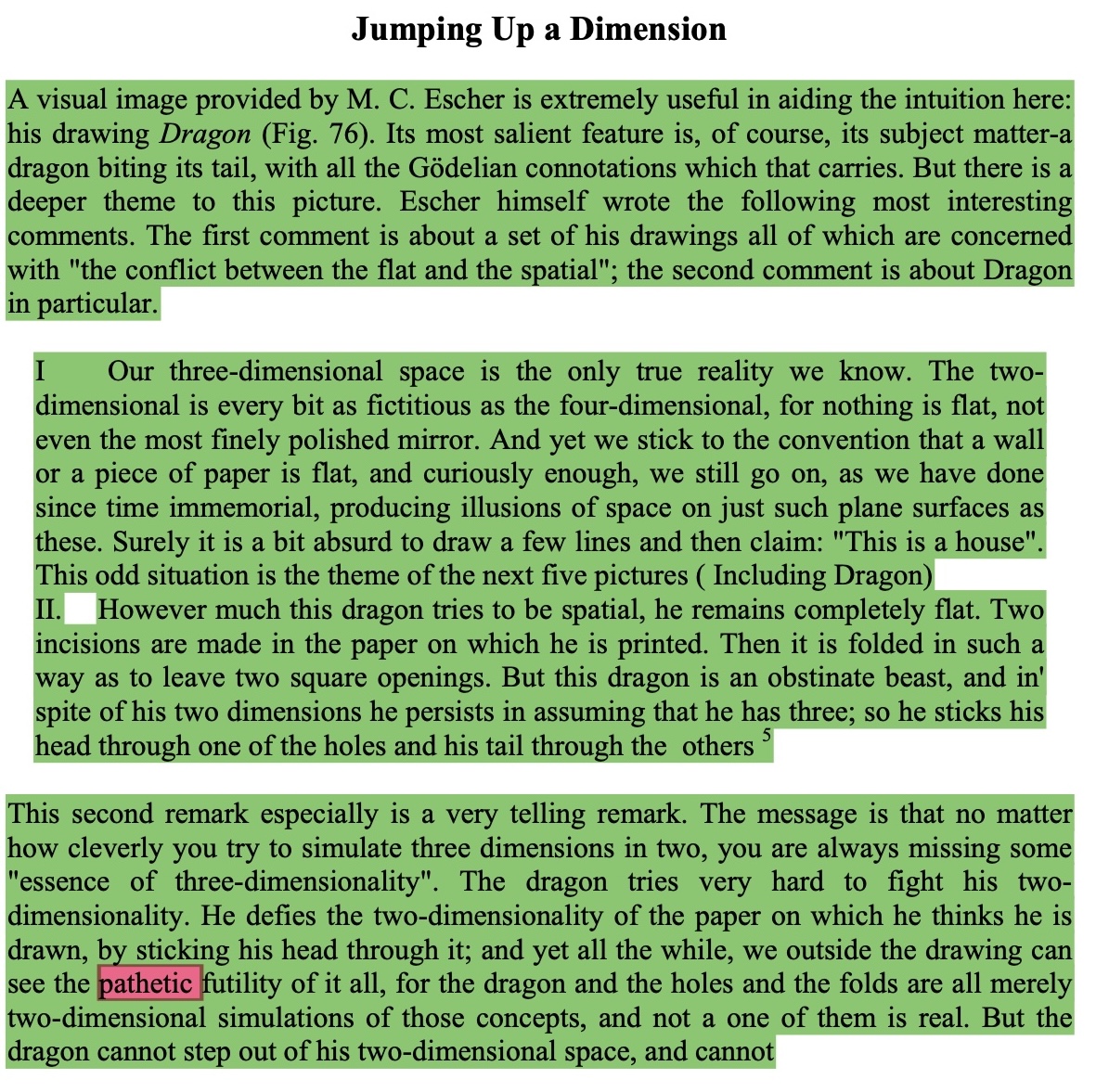
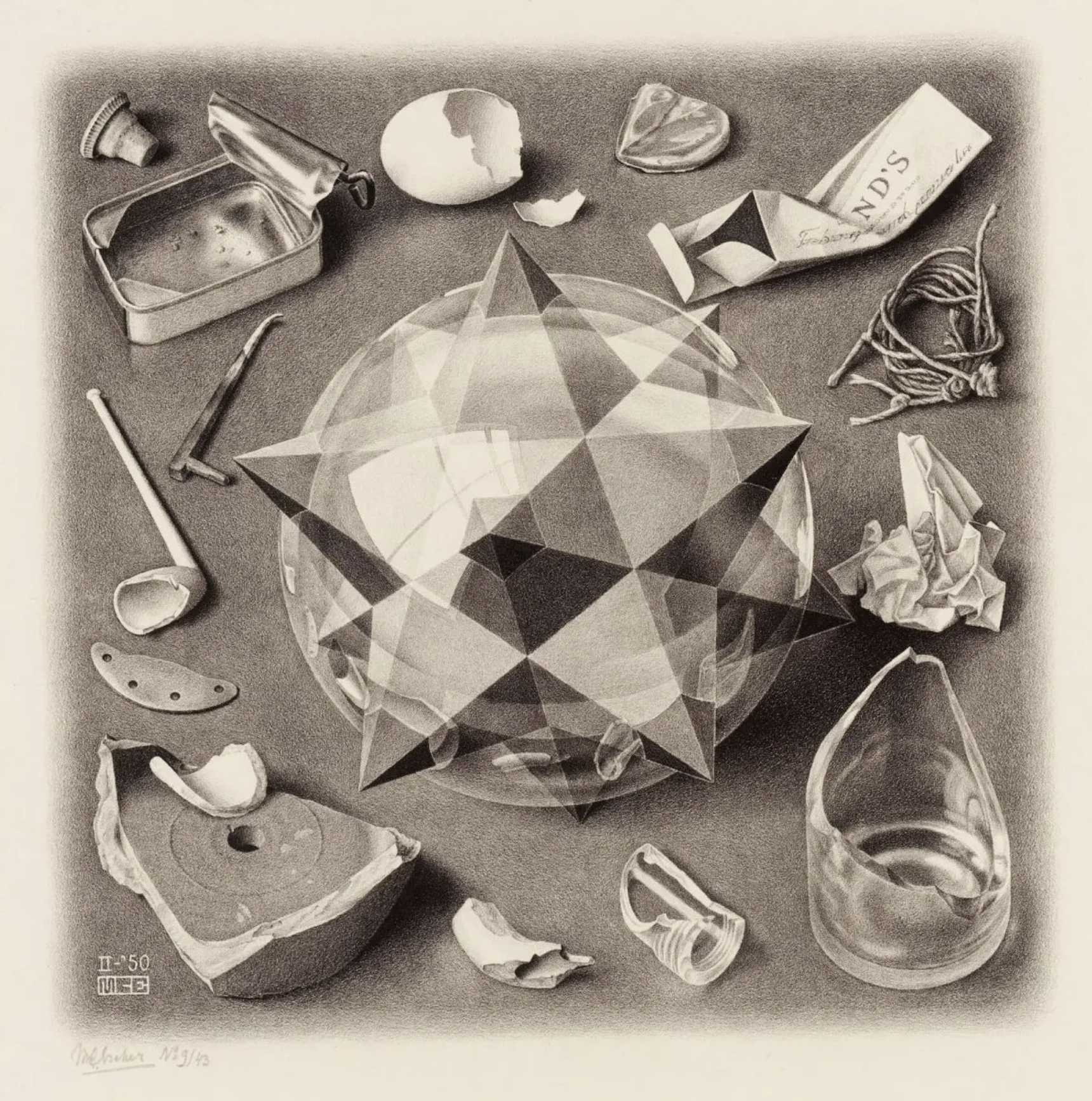
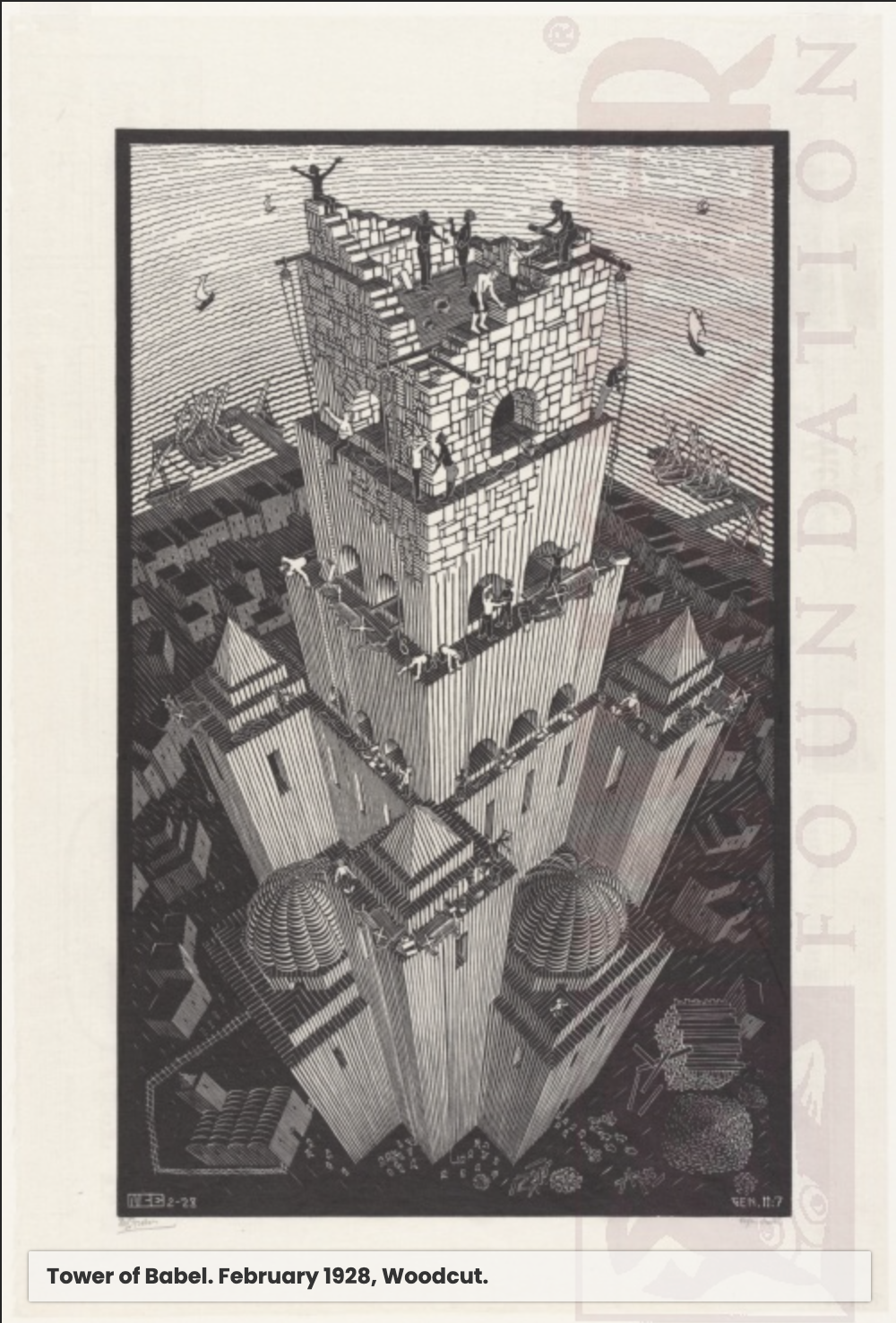
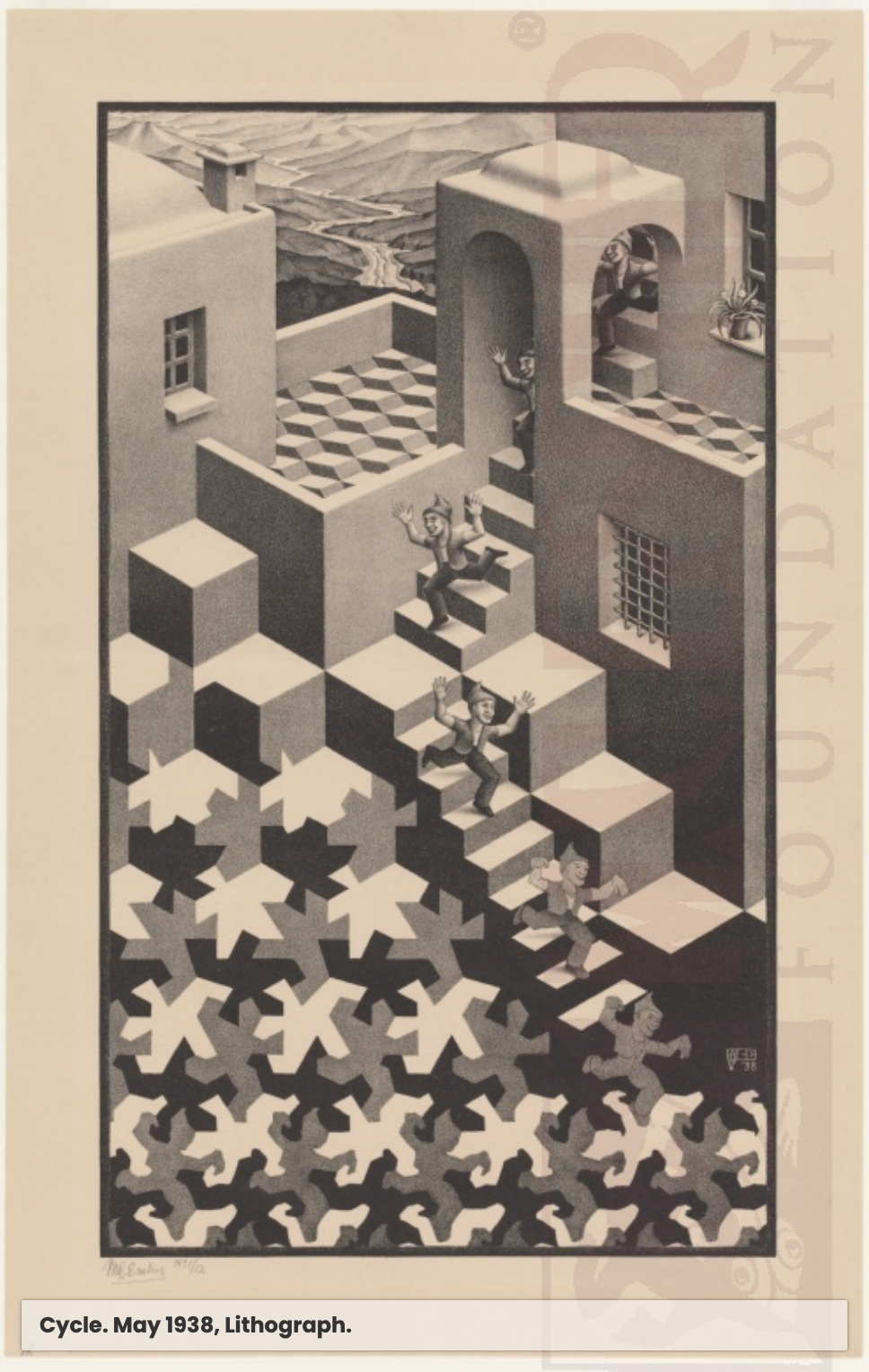
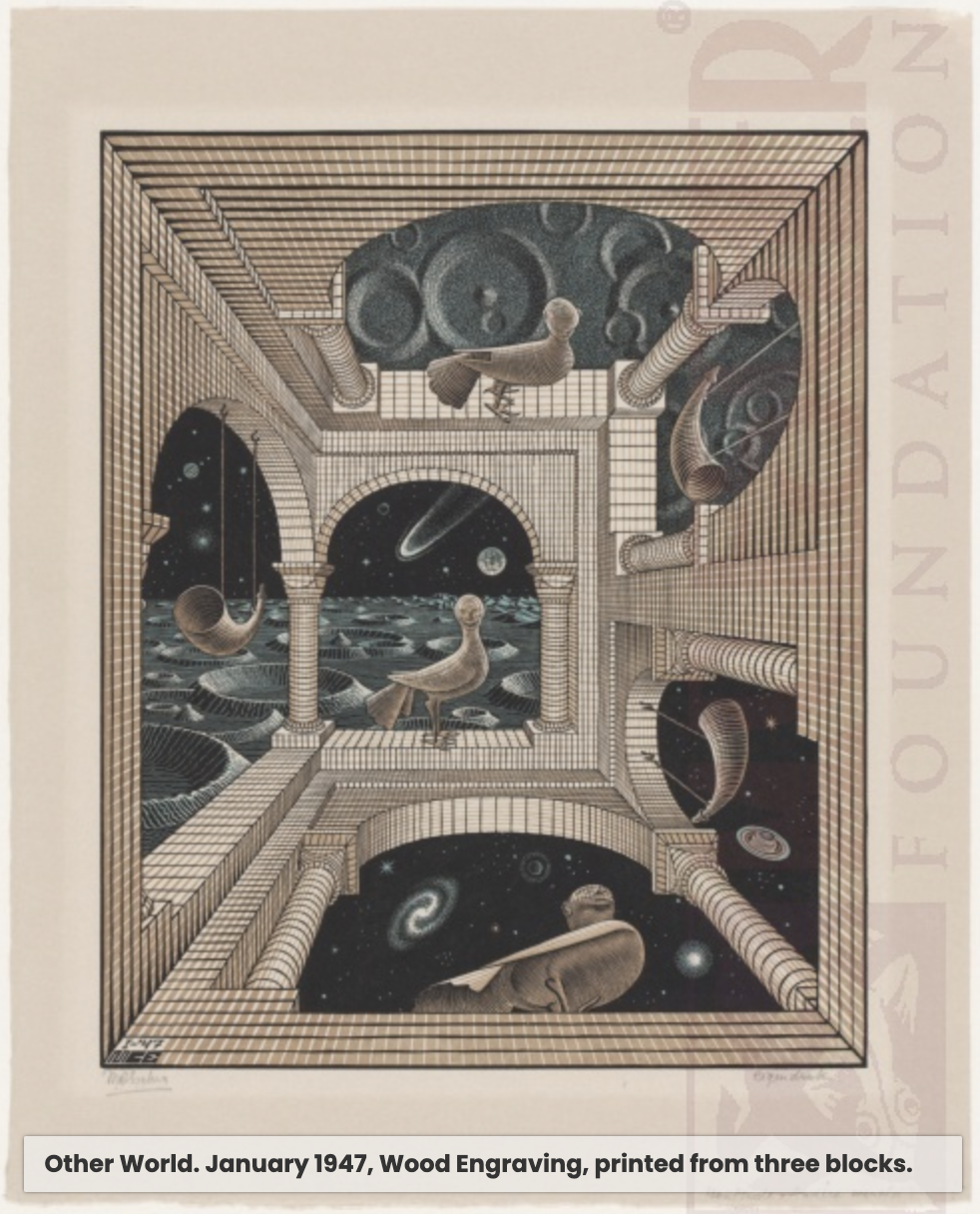
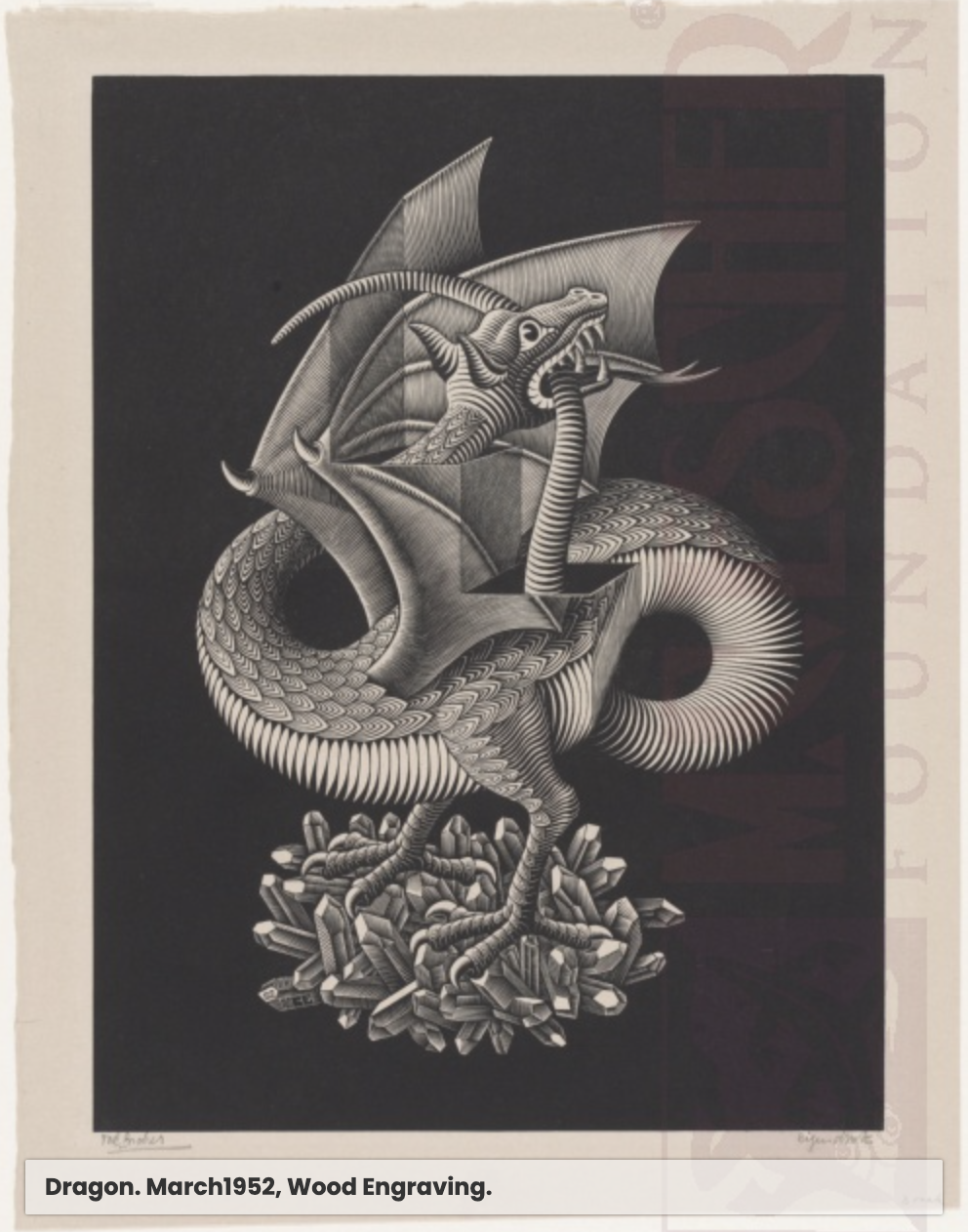
this week i re-read gödel, escher, bach after two decades (so one could say it was another human reading it). there was a lot to unpack, and maybe i'll make a post about it sometime.


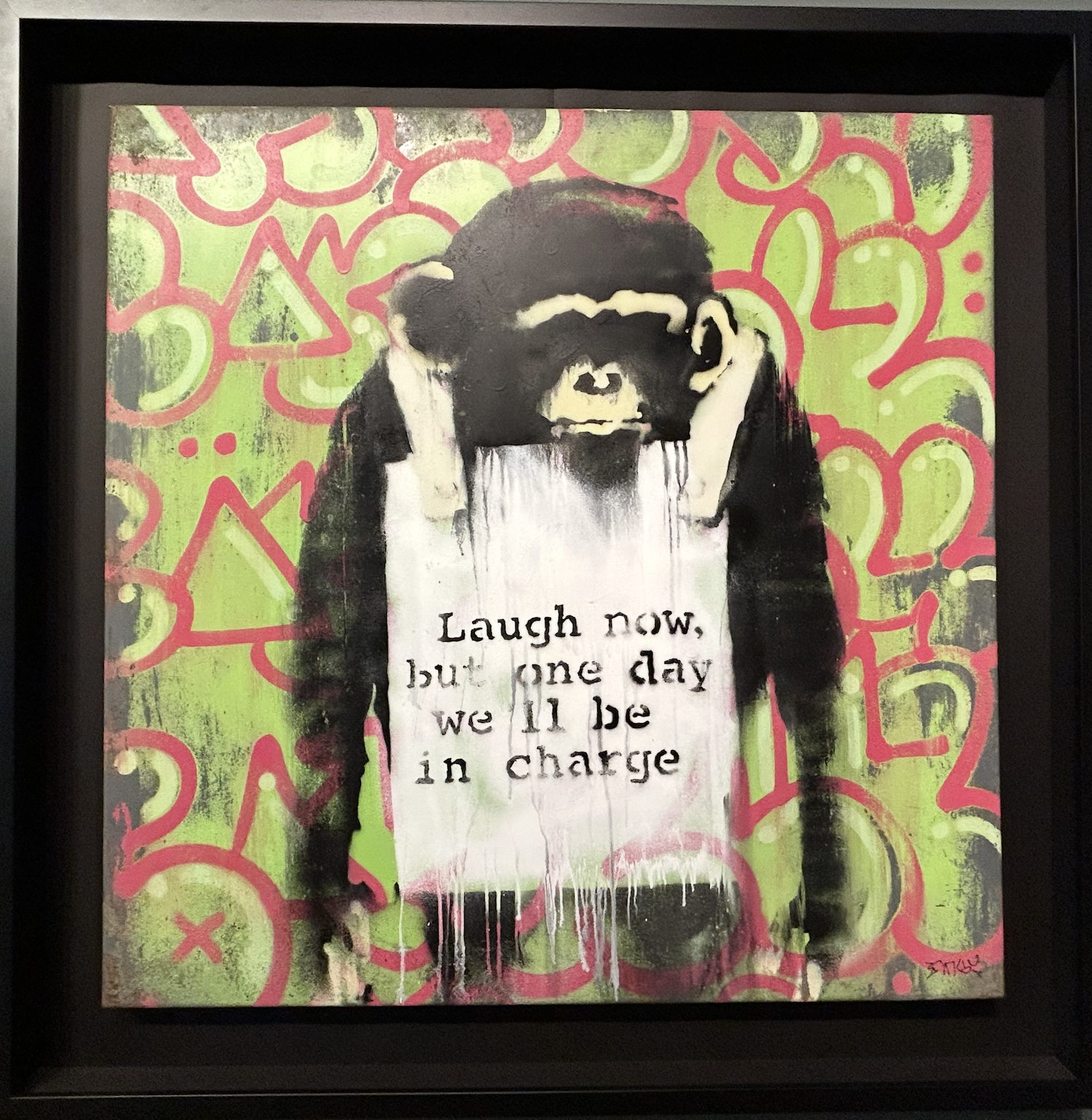
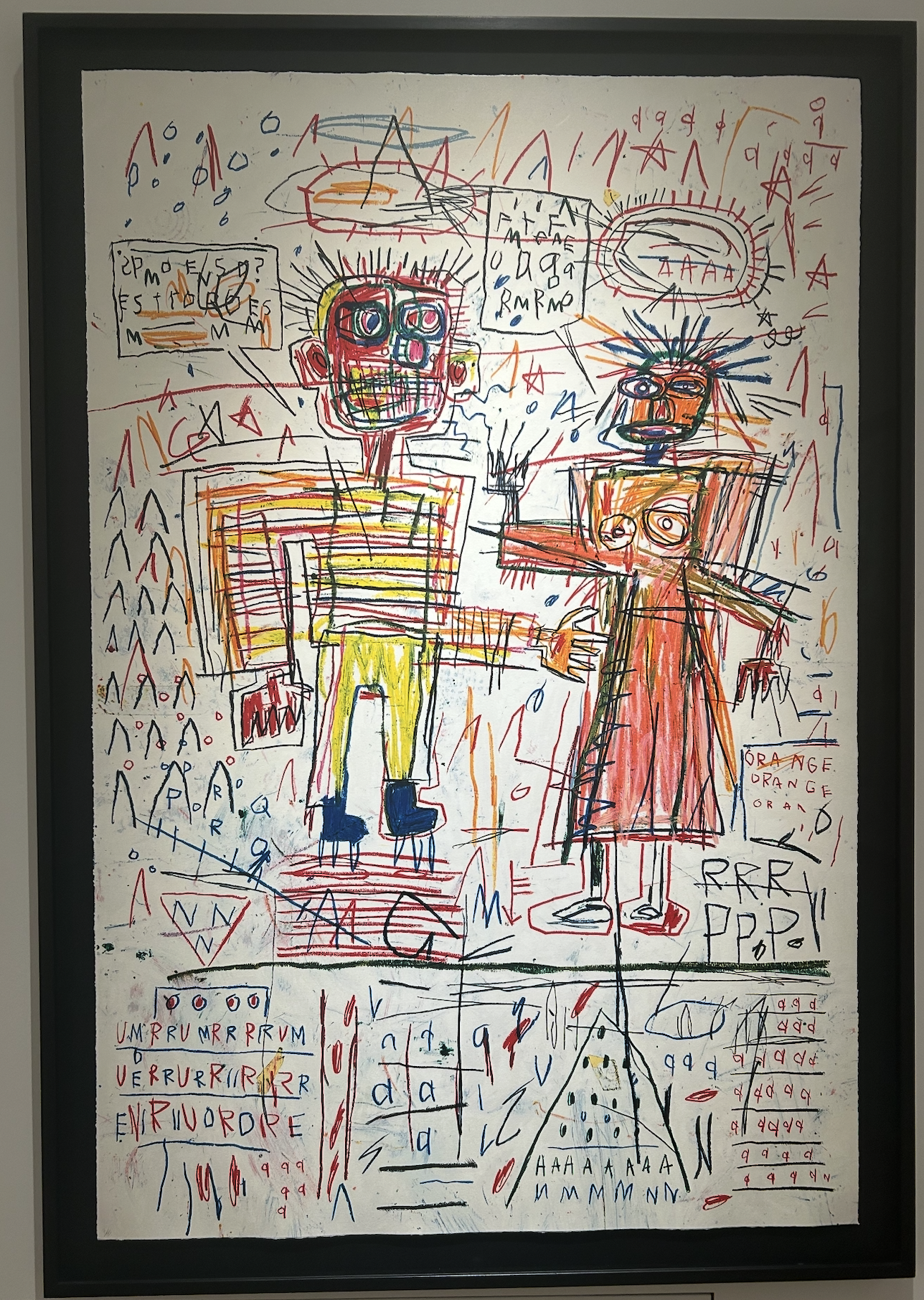
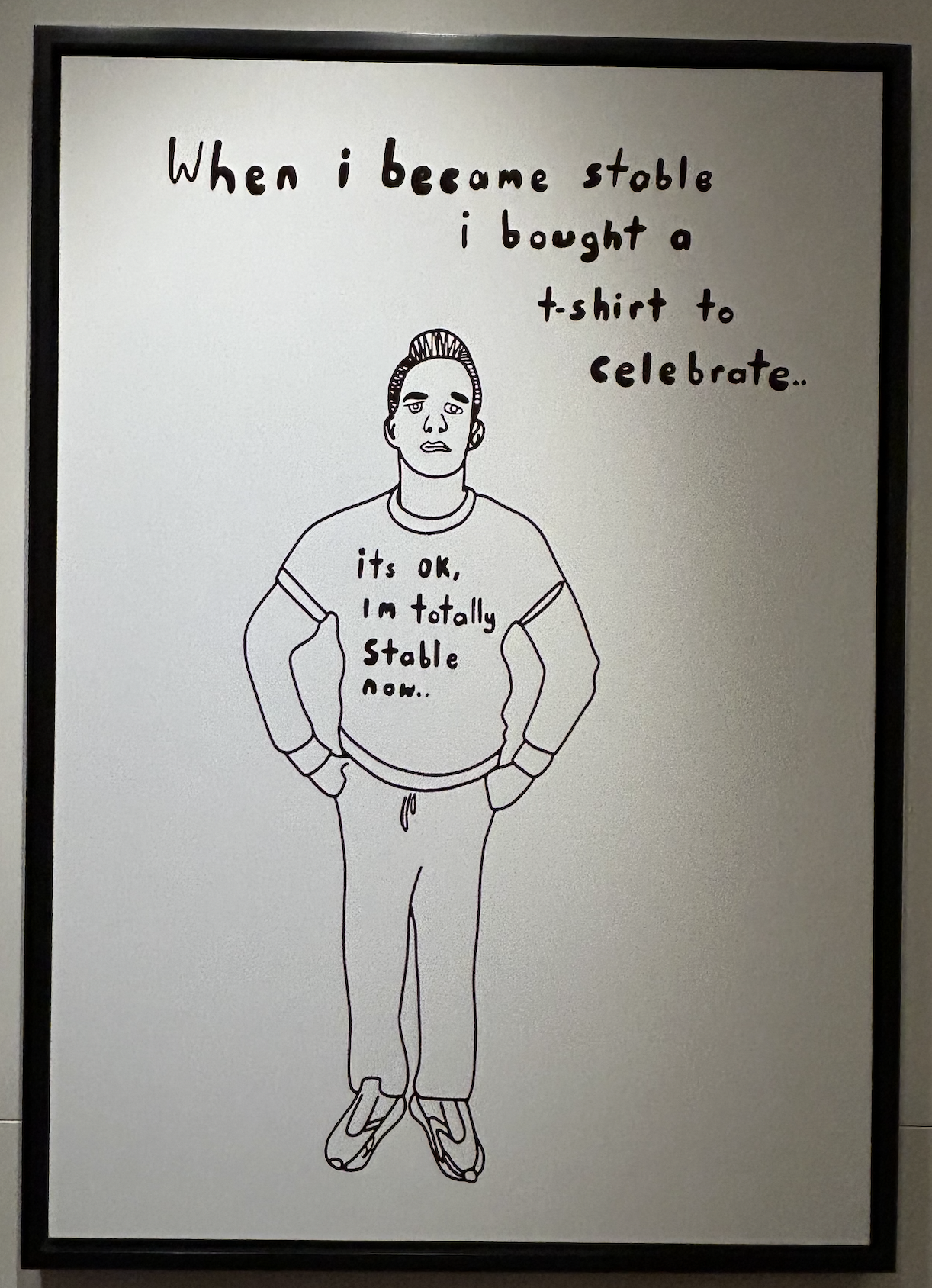
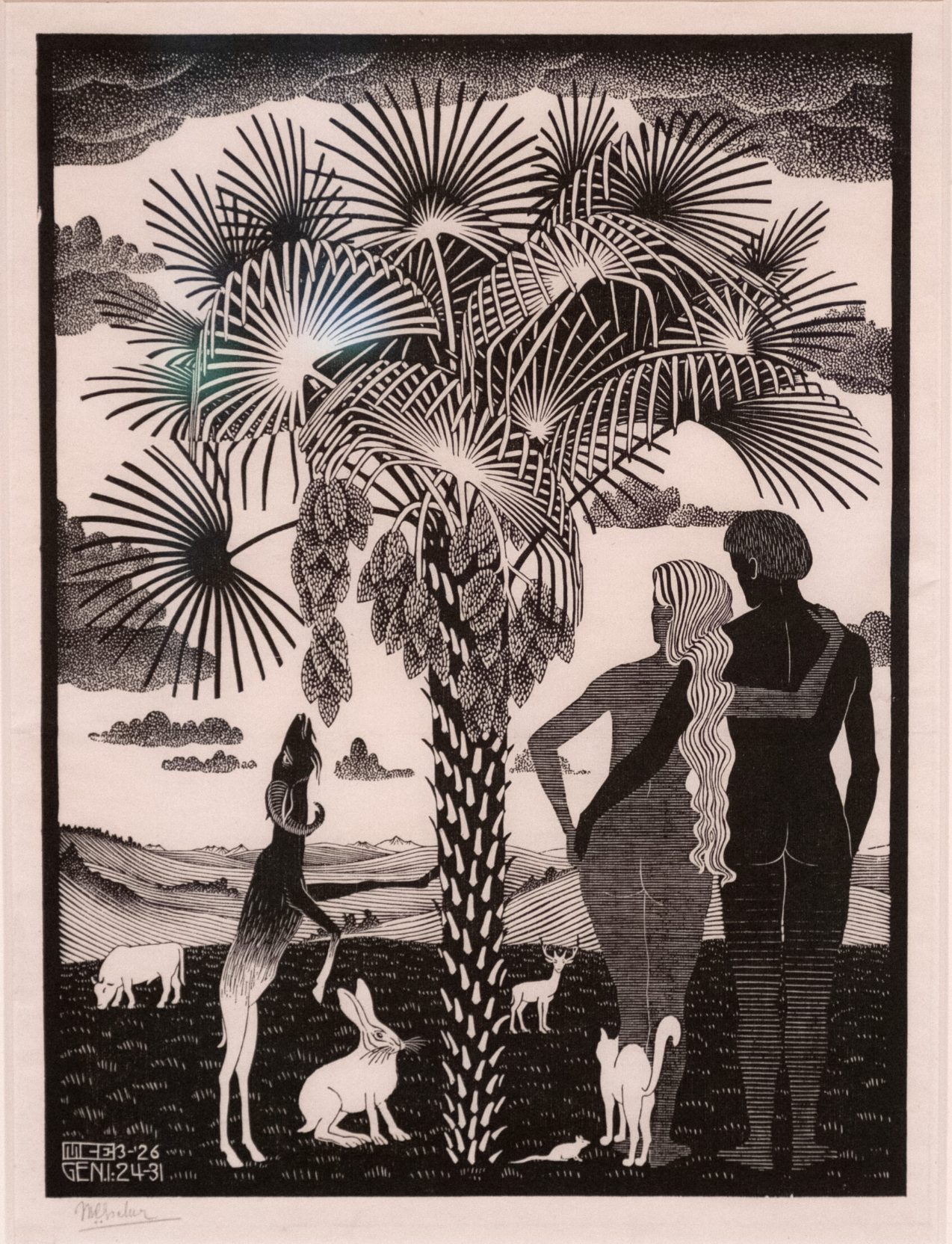
but for now, i'm just gonna be in the moment, after the most traumatic year of my life, and share some art from one of my favorite museums in amsterdam to celebrate it's over (one way or another).


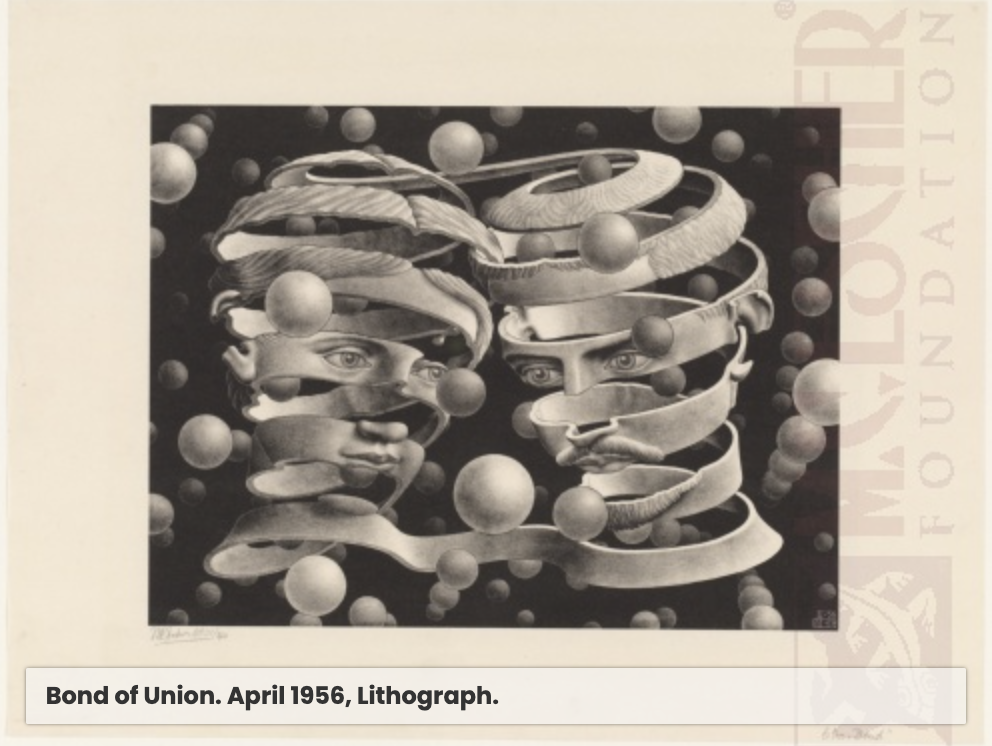
meanwhile... do you agree with my escher 🔛 bach association?

prelude & fugue in C major, BWV 846

goldberg variations, BWV 988: aria


suite in B minor, BWV 1067


ich hatte viel bekümmernis: I. sinfonia

matthäus-passion; BWV 244: II. erbarme dich

suite in G major; BWV 1007: I. prélude

partita in D minor; BWV 1004: V. chaconne

concerto in D minor; BWV 1043: I. vivace


north shore; 2025, june, 23


(new moon soon in my 6th [☍ my 🌙 ] && [☌ ♃]; ♇ ☍ my ♂; ♂ ☌ my ♀; ⚸ && ⚵ still in ♏︎; ♀ ☌ my IC; 11d for ♅ ♊︎)

the shadow: part I, "midsummer"

"the worst sin is aimless pride, because it is the one sin that directly confronts G'd. and vanity is the last stop before pride." — bt3gl


"when the cost of communication is zero, the parasite swallows the system." — michel serres on parasites (1980)


"wherefore, my beloved brethren, let every man be swift to hear, slow to speak, slow to wrath. for the wrath of man worketh not the righteousness of G'd." — james 1:19


"behold, a people rises like a lioness, and lifts itself up like a lion; it shall not lie down until it has devoured the prey, and drinks the blood of the slain.” — numbers 23:24

hawai'i; 2025, june, 14


(♃ finally out of ♊️; ☉ conjunct my ☊ in ♊️; collective ♃ ◼ ♄ and ♂ ◼ ♅ (ouch!) and ☿ in ♋️)

aloha, my dear anons — today we kick off the epic summer of 2025 with a gemini fest

once upon a time, there was a lil girl who loved to write and decipher codes
(and she was very good at it)

her first passions were AI and the universe —
her utmost desire was to change the world through technology and science

after many decades of hard work and dedication, she finally finds herself at the right time and place

and with a lil help from her friends, she started living her dream fully
(and reality became her playground
) 🌺

group theory is the study of symmetry, where a group is a set of elements combined with an operation that satisfies certain rules

let's play with the idea of applying high-level concepts from group theory to astronomical configurations, as a lens for exploring patterns within chart(s)

a basic framework

1️⃣ elements in the group are the luminaries, planets, asteroids, lots, etc. (which are themselves divided into subgroups)
2️⃣ operations in the group are the aspects: the angular relationships between two elements, corresponding to symmetries on the circle
(a conjunction is 0°; an opposition is 180° — a reflection or C₂; quintile is 72°; a trine is 120° — a rotation symmetry of a triangle or C₃)
3️⃣ there are 12 constellations, each with 30 degrees of arc (also called "houses") — where each degree has a different significance (e.g., 0° is very different from 29°)
4️⃣ the four qualities and the three modalities create distinct (sub)groupings and symmetries

property I: closure ➡️ if you combine any two elements in the group, the result is still an element within that same group

if you merge the archetypes associated with two constellations, the result remains interpretable within the archetypal framework
if you apply an aspect (a group operation) between two objects, the result is still an aspect within the system

property II: associativity ➡️ (a⋅b)⋅c = a⋅(b⋅c)

consider a complex planetary configuration, say a t-square with three objects
the overall astrological interpretation of that t-square's influence remains consistent, regardless of the order in which the objects are considered

property III: identity ➡️ there is an element that leaves other elements unchanged when applied through the group operation

for example, consider a simple rotation group: scorpio (8) + 5 → aries (1), because 8 + 5 = 13 ≡ 1 mod 12
this operation: is closed (always lands on another constellation), has an identity (rotates by 0), has an inverse (rotates backward), and is associative (the order of rotating doesn't matter)

another example of identity in relation to modalities or qualities can be extrapolated from the constellation in which an object is exalted or in its domicile, as this may be seen as representing its identity state

property IV: inverse ➡️ every element has an inverse that, when combined through the group operation, produces the identity

following the same logic, the constellation where an object is in detriment can be seen as the inverse of its exalted state

to be continued...

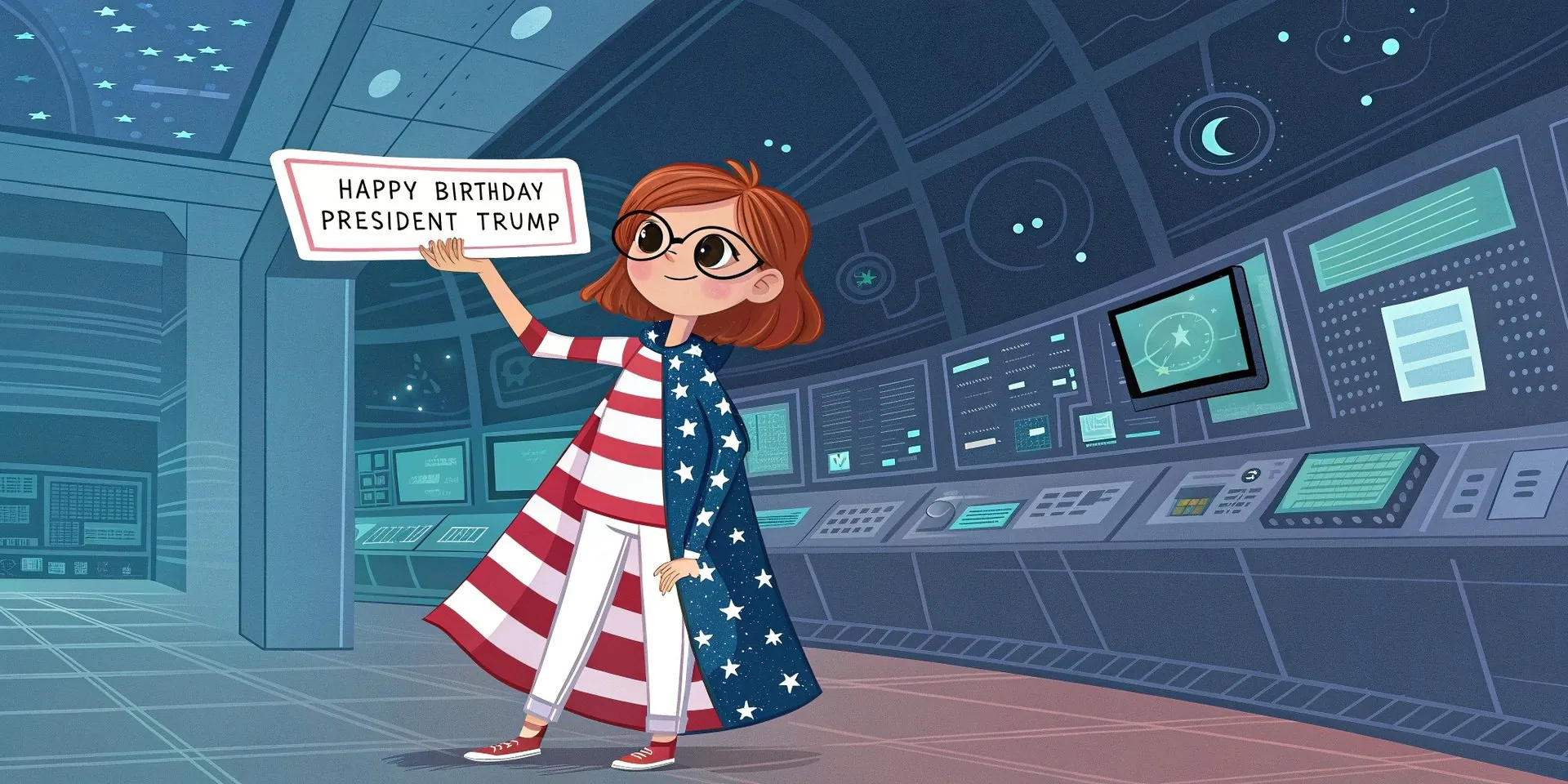
meanwhile... can you guess the prompts and the styles for this fellow gemini's birthday celebration?

✨ google gemini version ✨


✨ recraft.ai version ✨